
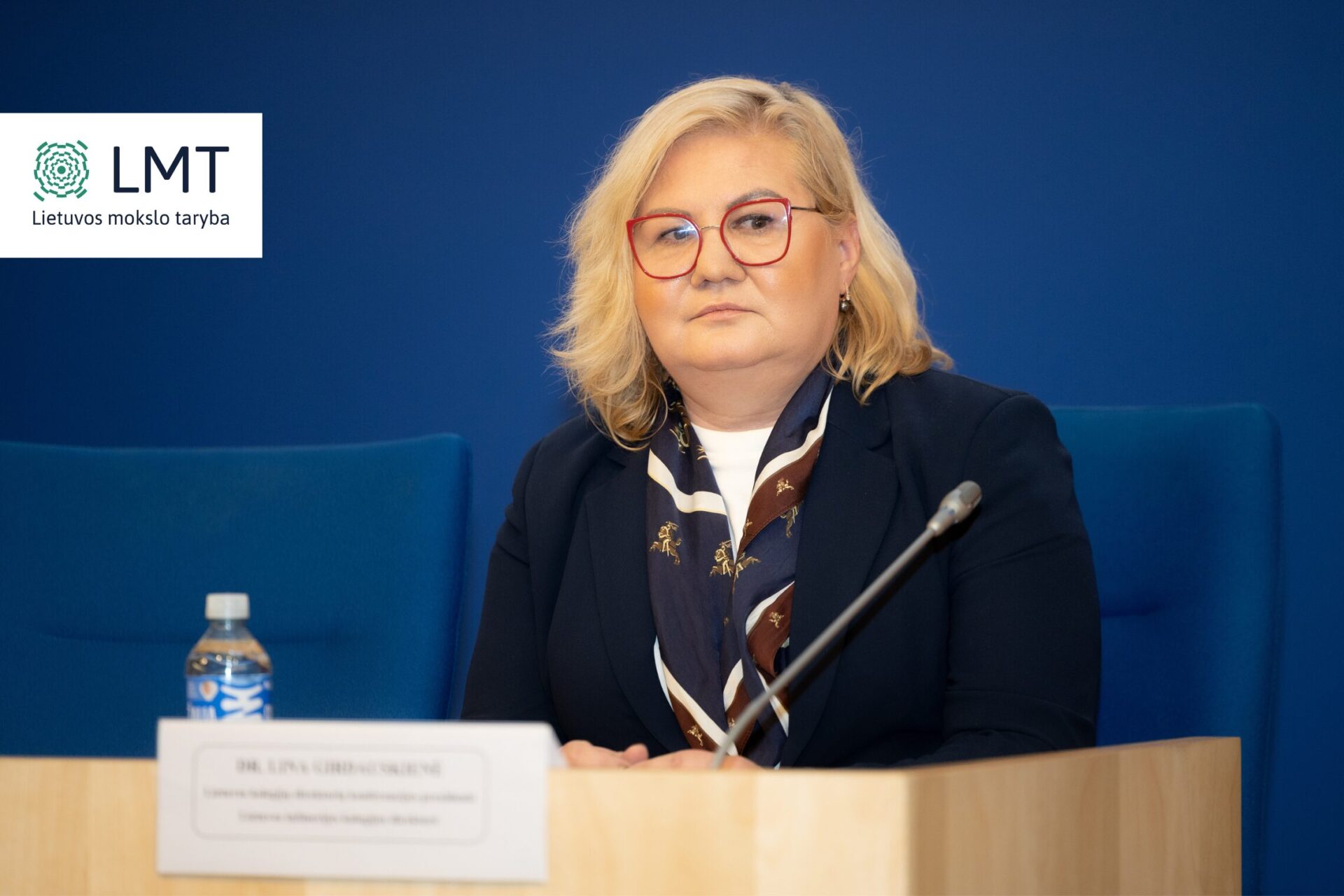
The formal evaluation results of applied scientific research, experimental development, and artistic activities in colleges, published by the Research Council of Lithuania (LMT), reveal a steadily strengthening identity of this sector. Colleges are increasingly recognized as knowledge and innovation hubs important to regions –places where applied research, creative practices, business partnerships, and international cooperation intersect.
According to the Law on Science and Studies, the mission assigned to colleges includes not only the development of applied research or professional art but also a strong social commitment – to contribute to sustainable regional development, to strengthen community capacities, and to train specialists whose competencies directly meet today’s economic needs. Colleges are also becoming more active participants in European applied science networks, expanding their visibility and opening new opportunities for collaboration.
We discuss these processes, the sector’s growing maturity, and the place of colleges in the Lithuanian and European knowledge ecosystem with Dr. Lina Girdauskienė, President of the Conference of Directors of Lithuanian Colleges and Director of the Lithuanian College of Engineering.
– Every year, formal R&D and artistic activity assessments reveal growing diversity in colleges’ applied activities: from social sciences to engineering, from dissemination of research and art to commissioned activities and international projects. In your view, where does the college sector see its strengths and greatest potential today? In which areas could breakthroughs still occur? How do colleges themselves formulate their long-term vision in applied research or professional art?
– The college sector is heterogeneous, and the spread of R&D and artistic output is very wide – from social sciences to engineering, from dissemination to commissioned work or international projects. It is true that R&D activities began to be carried out more actively only after the 2022 amendments to the Law on Science and Studies, which changed the mission of colleges: not only to train specialists but also to base studies on research. The internationalization dimension has also become extremely important; colleges are now engaged in international networks, projects, and are part of European University alliances. Speaking about the future vision, we first need time – time to attract researchers, develop infrastructure, prepare project proposals, and initiate applied research contracts. As a sector, we are only beginning, and much remains to be done before we earn full trust in our professionalism.
– This year’s formal evaluation data show clear distinctions among colleges – intensive artistic dissemination at Vilnius College and exceptional volumes of commissioned R&D at the Lithuanian College of Engineering. How do you think colleges perceive their unique competencies, and what specializations is the sector purposefully developing nationally and internationally?
– Each college chooses its own unique path – some focus more on commissioned research, others on dissemination of research and art, while others actively engage in international networks. Larger-city colleges operate broadly, while regional colleges are better positioned to meet the needs of local businesses, society, or communities. Core competencies are beginning to take shape.
– In 2024, colleges attracted €2.7 million through commissioned and project-based R&D and artistic activity contracts, though only a small part of these funds was recognized by LMT experts as formal applied R&D or artistic activity. How do colleges interpret this discrepancy – as a growth phase, a methodological or administrative challenge, or an opportunity to expand partnership models and improve documentation and project management?
– This is a new activity for colleges. Naturally, various challenges arise – both in attracting funds and preparing reports. One of the greatest difficulties is the constantly changing methodology – what applies one year may not apply the next. It is also very important to agree on what constitutes R&D in the context of colleges, as colleges work with local businesses and regional needs at the national level. If global-level innovation is expected, it will likely be difficult to achieve. Our mission is very different.
– Regional partnerships and strong ties with economic actors remain one of the college’s greatest strengths. How is this relationship evolving? Are colleges becoming regional knowledge and innovation platforms, or even forming new types of professional innovation centers that address local market needs? How are collaboration practices and goals changing?
– I am delighted that you noticed this shift. Yes, our goal is to become catalysts of regional innovation –innovation centers. Our close cooperation with local governments, industries, businesses, and communities allows us to create ecosystems in which we can support one another – train and retrain employees, solve everyday workplace challenges, find optimal solutions, and help ensure competitiveness and efficiency.
– Internationalization is not yet broadly reflected in formal evaluations, but Lithuanian colleges actively join European applied science networks. Where do colleges see the greatest opportunities for international engagement – project-based activity, joint studies, innovation consortia, or strengthening links between vocational and higher education?
– Internationalization is a new requirement for colleges. It is unrealistic to expect very quick results, just as in research. But everyone is actively participating in international networks and preparing projects. We all know how time-consuming this is, so results may only emerge in a year or two. Each college chooses its own path. Four colleges (Šiauliai, Vilnius, Kaunas, and the Lithuanian College of Engineering) are members of European University alliances and are very active there; others prepare international projects individually. The possibilities for joint studies under the law are still vaguely defined, creating administrative challenges – we hear contradictory legal interpretations. Some say we can implement them, others say we cannot. A legal revision that clearly defines our operating principles would encourage the development and implementation of joint programs with foreign universities.
– You are a member of the EURASHE board and council – a strategic position for the visibility of colleges in Europe. What priorities do colleges want to highlight within this European context, and which international formats could expand their horizons the most?
– EURASHE is the voice of universities of applied sciences in Europe. Being part of this association allows us to learn from one another, share best practices, and participate in policy-making processes. The Conference of Directors of Lithuanian Colleges has been a member of EURASHE for more than twenty years. During this period, Dr. Gintautas Bražiūnas and Dr. Nijolė Zinkevičienė have served as board members and vice presidents; now it is my turn to actively participate in governance and contribute to shaping European education policy. Such recognition of Lithuanian colleges demonstrates our achievements in terms of quality.
Unfortunately, we still often face a lack of understanding from European universities of applied sciences regarding who we are and why we do not conduct professional Master’s studies or industrial doctorates, which are standard practice in Europe. Even our Lithuanian institutional name misleads them, as most such institutions are called universities of applied sciences. Unfortunately, we will only be allowed to adopt this name legally in 2029, after achieving a score of 3 out of 5 in two research fields.
We aim to have the same rights as other European universities – to use the same designation and to offer professional Master’s and industrial doctoral studies.
– The requirement that college lecturers have practical experience creates a unique synthesis of professional expertise and academic activity. How is this synthesis today being transformed into innovations, applied research projects, regional initiatives, and international partnerships?
– This synthesis results in R&D activity. For lecturers, shifting from one type of activity to another in such a short time is challenging, but the results show that it is possible.
– The regional mission is defined in law as contributing to sustainable development and strengthening community capacities. Which regional initiatives do you already see as evidence of college leadership, and where do you see the greatest potential breakthroughs in the coming decade?
– We clearly see potential to implement the European Commission’s Pact for Skills. Colleges—individually and in consortia – can address regional needs and act as drivers of knowledge valorization. We are working in this direction, negotiating with municipalities and associations, defining our strategic competencies, and preparing proposals.
– Evaluation data reveal sector fragmentation – some colleges report hundreds of dissemination outputs, while others report only a few dozen. How does the sector interpret these differences – as natural specialization or as a signal to harmonize dissemination practices and competencies?
– Colleges differ: some are large and naturally produce higher results, while others are specialized or small. These are entirely different contexts. Another significant factor is the large number of goals set for colleges – it is very difficult to achieve all of them equally well. I want to emphasize again: we are commenting on and trying to draw conclusions from only two years of results since the new requirements took effect. Give us time, provide resources, allow us to work, and do not change the evaluation methodology every year – and we will produce results.
– From a systemic perspective, the college sector appears to be a maturing, dynamic ecosystem with strong potential – uniting regional competencies, practical and applied activity synergies, international ambitions, and creative professional innovation. What future vision do colleges themselves articulate, and what message would they like to send to Lithuania and Europe about their role in today’s knowledge and innovation economy?
– Thank you for this evaluation. I am very proud of our entire college community, which has shown courage in taking on this mission, responsibility in understanding Lithuania’s needs, and competence through consistent work and demonstrated results. We want more support, trust, and encouragement. I sincerely believe that we will become centers of regional innovation.
Interview by Ernesta Šneideraitytė, LMT