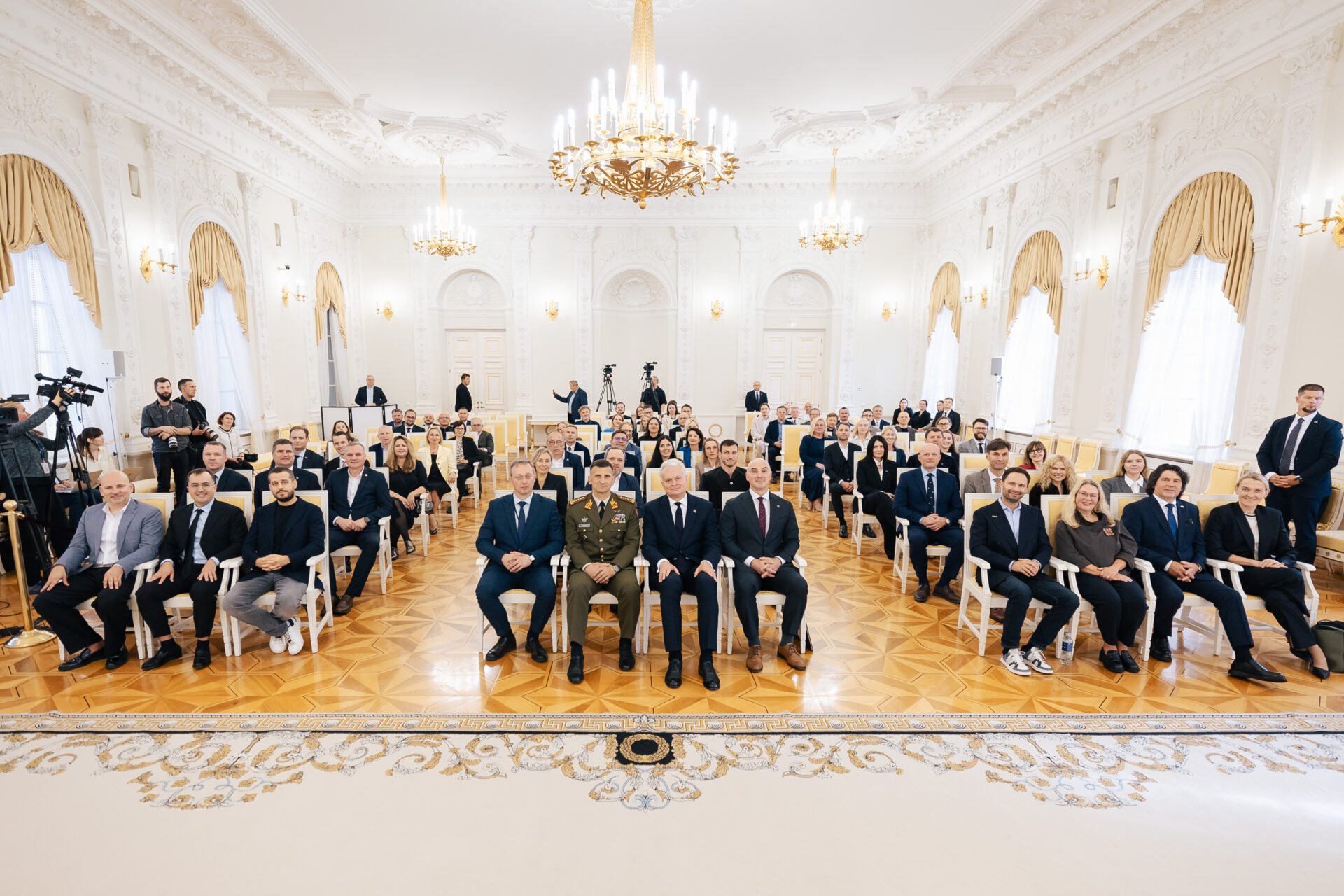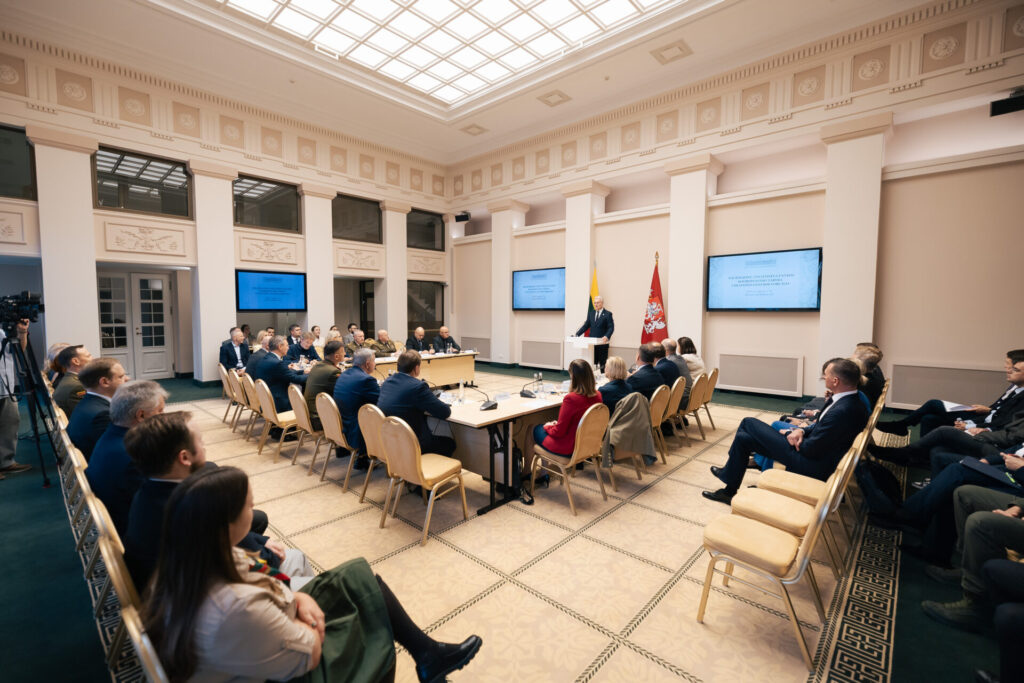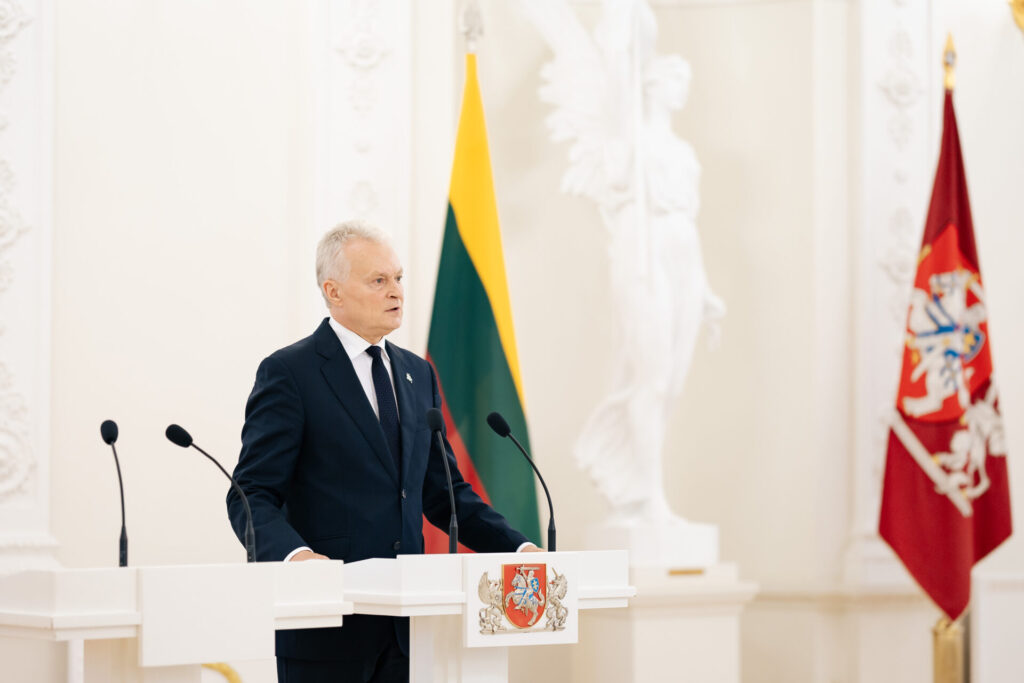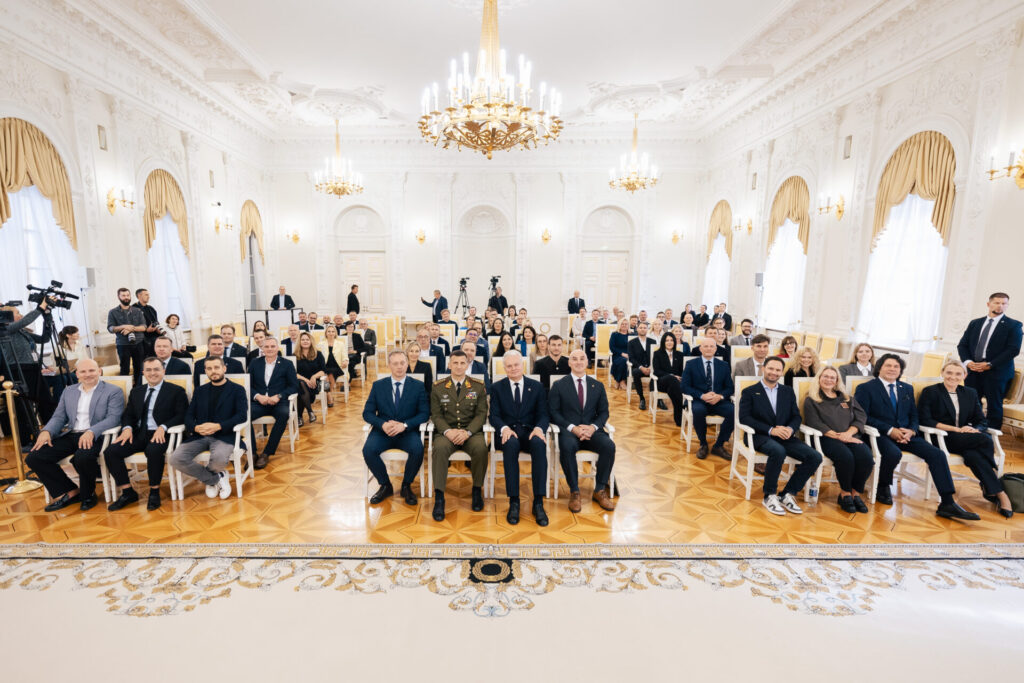
During the Comprehensive Defence Forum held at the Presidential Palace of the Republic of Lithuania, 63 businesses, municipalities, non-governmental organisations, associations and public institutions formalised a shared commitment to systematically prepare for their role in comprehensive defence. According to calculations by the association Visuotinė gynyba (“Comprehensive Defence”), organisations that have joined the Charter of Commitments by Lithuanian Organisations for Comprehensive Defence can engage approximately 400,000 people in Lithuania, as well as members of the Lithuanian diaspora in 55 countries, in coordinated defence efforts.
This is the first wave of organisations that, within a single month, have united and committed themselves to systematic preparedness: training employees, strengthening organisational resilience and business continuity, participating in exercises, and involving partners and communities in preparedness activities. Conference of Directors of Lithuanian Higher Education Institutions (LKDK) is among the first organisations to have signed the Charter of Commitments by Lithuanian Organisations for Comprehensive Defence.
The association describes this principle of action as the swarm effect – society’s ability to quickly organise itself into a coordinated and effective unit in complex situations.
“Today’s confirmation of commitments through signatures symbolically represents the lighting of a signal fire and the passing of a message to others: gather into a swarm, build resilience, light your own signal fires, and pass this message on to partners, suppliers, clients, associations, communities and other organisations. Comprehensive defence is everyone’s responsibility,” says Tomas Godliauskas, Head of the association Visuotinė gynyba. According to him, an information-sharing and coordination system will also be established in parallel.
The Charter of Commitments by Lithuanian Organisations for Comprehensive Defence serves as a practical preparedness standard for organisations. Its signatories commit to training their people, strengthening organisational resilience, and implementing additional preparedness measures every year. The association’s goal is that by 2030, 50 per cent of Lithuanian companies and organisations will understand their role in comprehensive defence and be prepared for it.
During the Comprehensive Defence Forum, signatures also formalised the Employers’ Initiative, through which employers commit to providing financial support to employees who voluntarily choose compulsory initial military service.
Within just the first week of the initiative, companies including Telia, Maxima, Hostinger, Omnisend, the Tesonet group, Artea Bank, Tele2 and the Kilo group joined the initiative. Together, these companies employ more than 20,000 people.
“We are witnessing the emergence of a new standard in the labour market. An employee decides to contribute to the defence of a common cause, while the employer, using military terminology, protects their back. The most important aspect is not a uniform support mechanism, but the principle itself – a person choosing military service should feel support not only from the state, but also from their employer,” states T. Godliauskas.
It is estimated that, depending on the support model chosen by an employer, a young person may accumulate between EUR 19,000 and EUR 22,000 in financial capital during nine months of service, including state benefits.
Organisational Mobilisation Complemented by State-Level Decisions
During the Comprehensive Defence Forum, the National Comprehensive Defence Coordination Council, chaired by the President, took another important step by adopting a principled decision on the necessity of introducing universal conscription in Lithuania by 2030.
The Council adopted a joint resolution to propose that the Ministry of National Defence and the Lithuanian Armed Forces assess over the coming months whether the introduction of universal conscription could be accelerated by five years and implemented by 2030. Different forms of service will also be evaluated. A decision on whether the state can organise universal conscription by 2030 is expected later this year.
A representative public opinion survey commissioned by Visuotinė gynyba and conducted in August showed that nearly 80 per cent of Lithuanian residents support the introduction of universal conscription by 2030.
“The decision of the National Comprehensive Defence Coordination Council is significant because representatives of society have unanimously expressed their expectation regarding the introduction of universal conscription and have passed the baton to politicians and institutions,” emphasised T. Godliauskas.